How to Choose a Vet for Life: What 63 Years of Caring for St. Pete Pets Taught Us
Skyway Animal Hospital
Veterinary Team
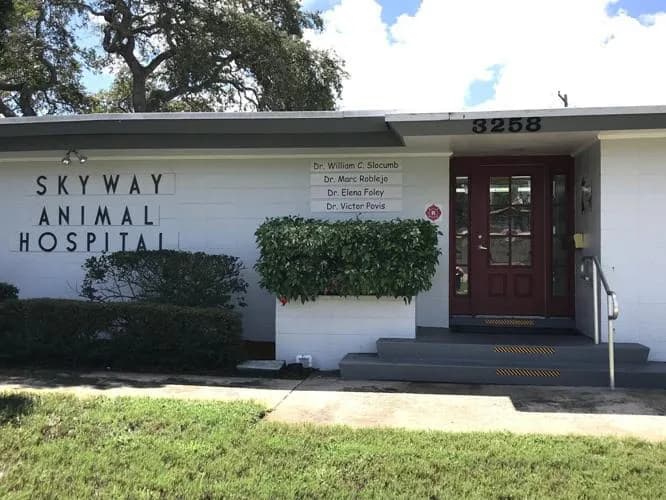
When Skyway opened its doors in 1961, John F. Kennedy was president, a gallon of gas cost 27 cents, and Dr. Few was making house calls in a white Chevy. A lot has changed. The reasons a family picks a vet — and the reasons they stay with one for twenty years — have not changed nearly as much as you'd think.
We've cared for three generations of some St. Petersburg families. Kids who came in with their parents' Golden Retriever in the 1980s now bring in their own Goldens. We've watched what makes those long relationships work and what breaks them. This post is an honest take on how to choose a vet who will still be the right fit for you five, ten, fifteen years from now.
What Actually Matters (And What Doesn't)
Most "how to choose a veterinarian" articles emphasize the wrong things. The shiny facility. The parking lot. The brand name.
In our experience, none of those predict a lasting relationship. Here's what does.
Continuity matters more than anything. When the same doctor has seen your pet every year for a decade, they catch things a first-time exam never will. A tenth-of-a-pound weight loss that wouldn't register to a new vet is a signal to the doctor who's been weighing that dog since puppyhood. A subtle shift in gait. A slightly different look in the eyes. This is the difference between reactive medicine and preventive medicine, and it is entirely dependent on the same person seeing the same pet over years.
Communication is a skill, not a personality trait. The best vets are the ones who can explain a complicated diagnosis in a way you'll actually remember three days later when your mother-in-law asks what's going on. That's a learned skill. Watch for it.
Preventive philosophy. Does the practice push care at you, or do they work with you on a plan? The sign of a practice worth staying with is one that says, "These are the three things that matter most for your pet right now, here's why, and here's what we'd do first." Not "here's the full package, sign here."
Willingness to say 'I don't know.' This is underrated. A vet who says "I'm not sure, let me check with a specialist" or "let me research this and call you tomorrow" is a vet who takes your pet's case seriously. Vets who always have an immediate answer often don't.
Five Questions to Ask Any Vet Before Committing
Whether you're new to St. Petersburg or just thinking about a change, these five questions tell you almost everything you need to know.
1. Who will see my pet when my regular doctor isn't here?
Every practice has days when the primary doctor is out. What happens then matters. Is there a second doctor who reviews your pet's chart and sees continuity patients? Or do you see whoever's available that day with no context?
The answer should be specific. "Dr. X and Dr. Y share continuity for patients in our practice" is a real answer. "We'll fit you in with whoever's here" is not.
2. What's your philosophy on preventive care vs. reactive?
Ask directly. A practice whose philosophy is "we catch problems early by building long-term relationships and doing thorough wellness exams" will answer immediately and clearly. A practice whose real philosophy is "we see pets when they're sick" will either dodge the question or give a generic answer.
Neither is wrong in every situation, but you want to know which one you're walking into.
3. How do you handle situations that happen outside regular hours?
This is where you learn whether a practice has thought about your life, not just their schedule.
We'll tell you our approach directly: Skyway is a neighborhood primary-care practice. We refer to 24-hour emergency and specialty hospitals for true after-hours emergencies — because those hospitals have the equipment and staffing that matches those cases, and we'd rather send you somewhere excellent than keep you somewhere adequate.
What you want to hear from any practice is a clear answer, a specific referral partner they trust, and a philosophy that matches your pet's life. A practice that is vague about after-hours situations is a practice that hasn't thought it through.
4. How long have your doctors and staff been here?
Tenure predicts continuity. Ask. A practice where the doctors and the front desk have been there for years is a practice where your pet's history is going to be remembered — not just in the chart, but in the room.
Turnover isn't always a red flag. New doctors join, people retire, life happens. But a practice where no one has been there for more than a year or two is a practice where you're going to be starting over every visit.
5. Will you know my pet in five years?
Ask this one last. The answer tells you whether the person across the desk is thinking long-term or transactionally. The right answer includes a pause, a real look at your pet, and something that sounds like a commitment.
Red Flags
A few things we've learned to watch for across decades of seeing clients come and go:
- High-pressure sales on services. Wellness care shouldn't feel like a car dealership. A good vet recommends, explains, and respects your decision.
- No follow-up after visits. Even a brief call or message to check in after a diagnosis or procedure signals that the practice sees your pet as a patient, not a transaction.
- Frequent price changes without explanation. Prices do go up, but a practice that communicates why and gives you options is a different practice than one that just raises the bill.
- Unwillingness to give you your records. Your pet's medical records belong to you. Any practice that makes it hard to transfer them is a practice you should transfer out of.
What a Vet for Life Actually Looks Like
We have clients whose grandparents brought their first dog to Dr. Few in the 1970s. Their parents brought cats in the 90s. They bring us their own dogs and cats now. Some of them bring their kids along so their kids can meet the vet.
That's what "a vet for life" means. Not a slogan. Not a marketing phrase. It means three generations of a family trust one practice enough to keep coming back — because the practice kept earning it, year after year, pet after pet.
The story of Frosty's case — where our team worked with our community to save 11 puppies — is a version of this. So is every annual exam for a 14-year-old cat we've seen since she was 8 weeks old. The quiet continuity is the thing. The individual dramatic cases only happen because the relationship was there first.
Schedule a Meet-the-Doctor Visit
If you're considering a change, or you've just moved to the St. Petersburg area, we offer meet-the-doctor visits. No exam, no commitment — just a chance to come in, meet our team, see the practice, and ask the questions above. We think that's a better way to pick a vet than reading reviews.
Call (727) 521-3518 or reach out online. We've been here since 1961, and we'd like the chance to earn the next five generations.
Written by the Skyway Animal Hospital team. Skyway has served Pinellas County pet families since 1961.