Summer Travel with Pets: What You Need Before You Fly, Drive, or Board
Skyway Animal Hospital
Veterinary Team
By mid-July, half of St. Pete is packing. Some families are headed up I-275 to see relatives, some are flying out of TPA, some are just going somewhere the Gulf isn't eighty-nine degrees. Whatever the plan, the pet question comes up late — usually the week before, right when it's hardest to fix.
The health risks get all the attention. What actually derails trips is paperwork: a rabies certificate you can't find, a health certificate dated outside the window, a kennel that turns you away at drop-off. That's not a medical problem. It's a logistics problem, and logistics problems have deadlines.
We've been helping Pinellas County families get out of town since 1961, and the pattern holds. Call three weeks out and the trip is easy. Call three days out and sometimes you don't go. Here's what to line up, and when.
Start With the Health Certificate, Then Work Backward
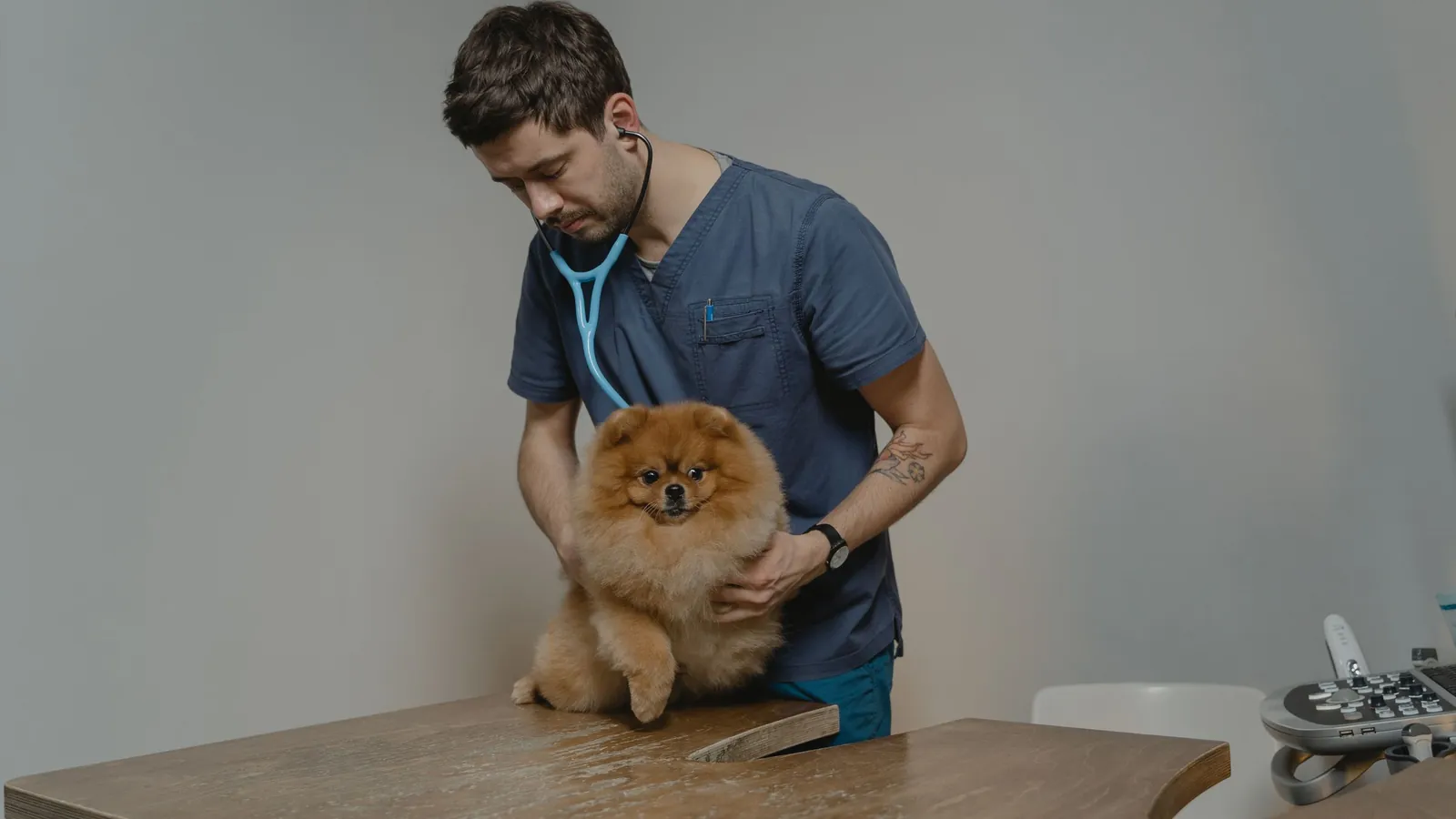
A health certificate — formally a Certificate of Veterinary Inspection, or CVI — is signed by a USDA-accredited veterinarian after an exam and says your pet is fit to travel. The federal form for dogs and cats is APHIS Form 7001. Not every trip needs one. Many do, and it has the tightest clock of anything here.
- It has to be issued close to departure. Ten days out is the most common window, but that's not universal — it varies by airline, by destination state, and dramatically by country. Verify the rule for your itinerary first. A certificate issued too early is as useless as none at all.
- International is a different animal entirely. Some countries want rabies titer bloodwork, an ISO-compatible microchip, parasite treatments inside set windows, or a USDA endorsement after we sign. Those steps take weeks or months. If you're leaving the country, call as soon as you have dates.
- Driving in-state? Usually nothing needed. It's crossing state lines and boarding an aircraft where a CVI comes into play.
Vaccines: What's Required Versus What's Recommended
There's a real difference between the vaccine your pet needs to be let in somewhere and the one we'd recommend for where they're going.
- Rabies is the required one. Florida law requires it, states require proof for entry, airlines ask, and every boarding facility we know of will turn a pet away without it. What you need is the certificate — date, expiration, tag number, signature. A tag on a collar is not proof. Cats need it too, and theirs is the one owners most often can't find.
- Bordetella is the boarding one. Kennel cough spreads where dogs share air, so nearly every kennel, groomer, and daycare requires it — most a week or two before arrival, not the morning of. Some want canine influenza too.
- Core vaccines should simply be current. DHPP for dogs, FVRCP for cats.
- Then there's the destination question. A dog going to a lake house up north faces different risks than one riding to Tallahassee. Leptospirosis and Lyme come up often — both worth a conversation, neither an automatic yes. Our vaccinations page covers what we carry; the useful version of that talk happens once we know where you're headed.
Flying: The Carrier, the Breed, and the Florida Heat
Air travel has the most rules and the least flexibility. Sort it out before you buy the ticket.
- The carrier has to fit under the seat. Most airlines cap in-cabin eligibility by carrier dimensions rather than weight. Soft-sided with mesh ventilation is the standard, and your pet must be able to stand and turn around. Every airline sets its own maximums, and they don't match.
- Snub-nosed breeds face real restrictions. Bulldogs, French Bulldogs, Pugs, Boxers, Persians — brachycephalic dogs and cats are commonly barred from cargo, since their airways make heat and stress dangerous. Many are still fine in the cabin. Read the policy closely; mixes are often included.
- Summer heat embargoes are a Florida problem. Airlines suspend cargo pet travel when ground temperatures climb — in July out of TPA, that's most afternoons. General-public cargo options have narrowed in recent years. Don't assume it's available.
Driving: More Prep Than People Expect
A road trip is the easier option. The failure points are predictable.
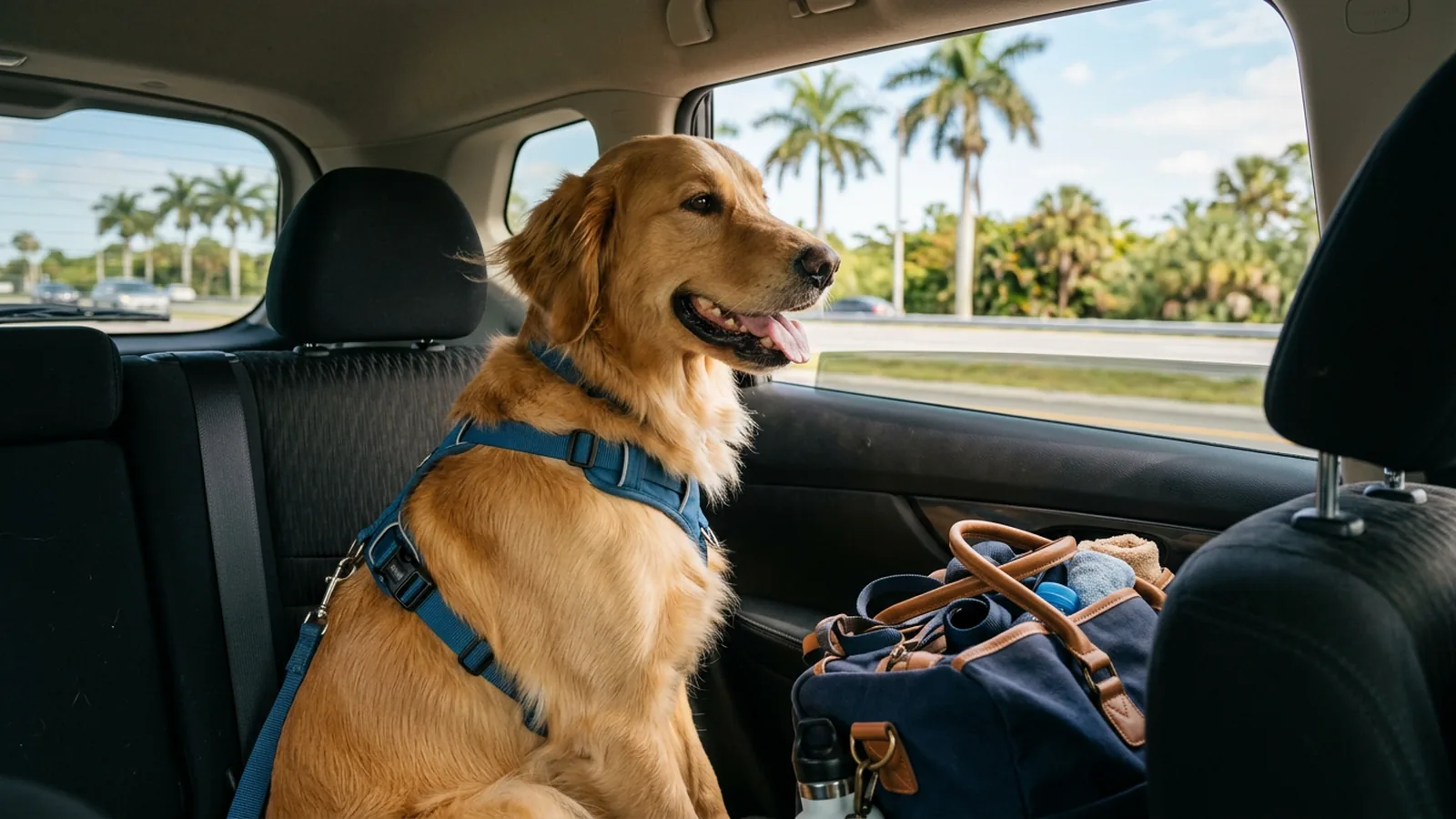
- Restrain them. A secured crate or a crash-tested harness. An unrestrained pet is a projectile in a crash, and a hazard in the footwell before that.
- Practice first. Short drives building to longer ones. If your pet drools, vomits, or panics in the car, tell us before the trip — motion sickness and travel anxiety are both treatable, and both work better started early.
- Never leave them in a parked car. Not for a minute. A Florida interior climbs to lethal in minutes, windows cracked or not.
- Update the microchip before you pull out of the driveway. Rest stops are where pets get loose — strange place, open door, everyone tired. A chip only works if the registry has your current number, and plenty still list an old one. Update it online, and put an ID tag on the collar.
Boarding: What the Facility Will Ask For at Drop-Off
If the pet stays home, the kennel has its own list — enforced at the door, when you have a flight to catch.
- Proof of rabies, current. Non-negotiable everywhere.
- Bordetella inside their required window, often a week or two before the stay.
- Flea and tick prevention current. Many will refuse a pet with fleas, and in Florida that's not rare.
- Medications in original labeled containers, with written dosing instructions.
- Ask for their exact list, then call us with lead time to meet it.
Your Pre-Travel Checklist
- Call us three to four weeks out — sooner for international
- Confirm whether your trip needs a health certificate, and its exact date window
- Locate the rabies certificate (the paper, not the tag)
- Get the airline's or kennel's requirements in writing
- Bordetella a week or two before boarding, not the day of
- Microchip registration updated, ID tag on the collar
- Carrier checked against that airline's published dimensions
- Crate or crash-tested harness for the car
- Their normal food, medications, and copies of their records
- Heartworm and flea/tick prevention current
- Our number saved: (727) 327-5141
Frequently Asked Questions
How far in advance should I see the vet before traveling with my pet?
For domestic travel, three to four weeks is comfortable. That leaves room for an exam, any vaccines that need lead time, and a certificate issued inside its window. For international travel, start as early as you can — titer testing, microchip verification, or a federal endorsement after we sign can run weeks to months. Call us at (727) 327-5141 during our hours, Monday through Friday 8 to 6 or Saturday 8 to noon, and we'll map out what you need.
Does my pet actually need a health certificate to fly?
Usually yes for air travel, and often yes for crossing state lines, but it depends on the airline and the destination. The certificate must come from a USDA-accredited veterinarian and be dated inside a specific window before departure — ten days is most common, though it varies, and international rules differ substantially. The mistake we see most is getting it too early. Confirm the requirement first, then schedule to land inside that window.
What vaccines does a boarding kennel require?
Rabies is universal, and virtually every facility requires a valid certificate. Bordetella, which protects against kennel cough, is required at nearly every kennel and usually must be given a week or two before the stay. Most also want core vaccines current — DHPP for dogs, FVRCP for cats — and some require canine influenza or proof of flea and tick prevention. Requirements vary, so call yours and get the list in writing before you book.
Travel with a dog or cat is entirely doable. It rewards planning and punishes the scramble. Once the logistics are handled, read up on traveling and regional disease risks for wherever you're headed, and make sure heartworm prevention is current before you go — mosquitoes aren't only a Florida thing. If you've got a trip on the calendar, give us a call during our hours and we'll walk through it. Sooner is genuinely better here.
Written by the Skyway Animal Hospital team. Skyway has served Pinellas County pet families since 1961.