
Halloween Pet Safety: Chocolate, Xylitol, Costumes and Door-Dashers
Skyway Animal Hospital
Veterinary Team
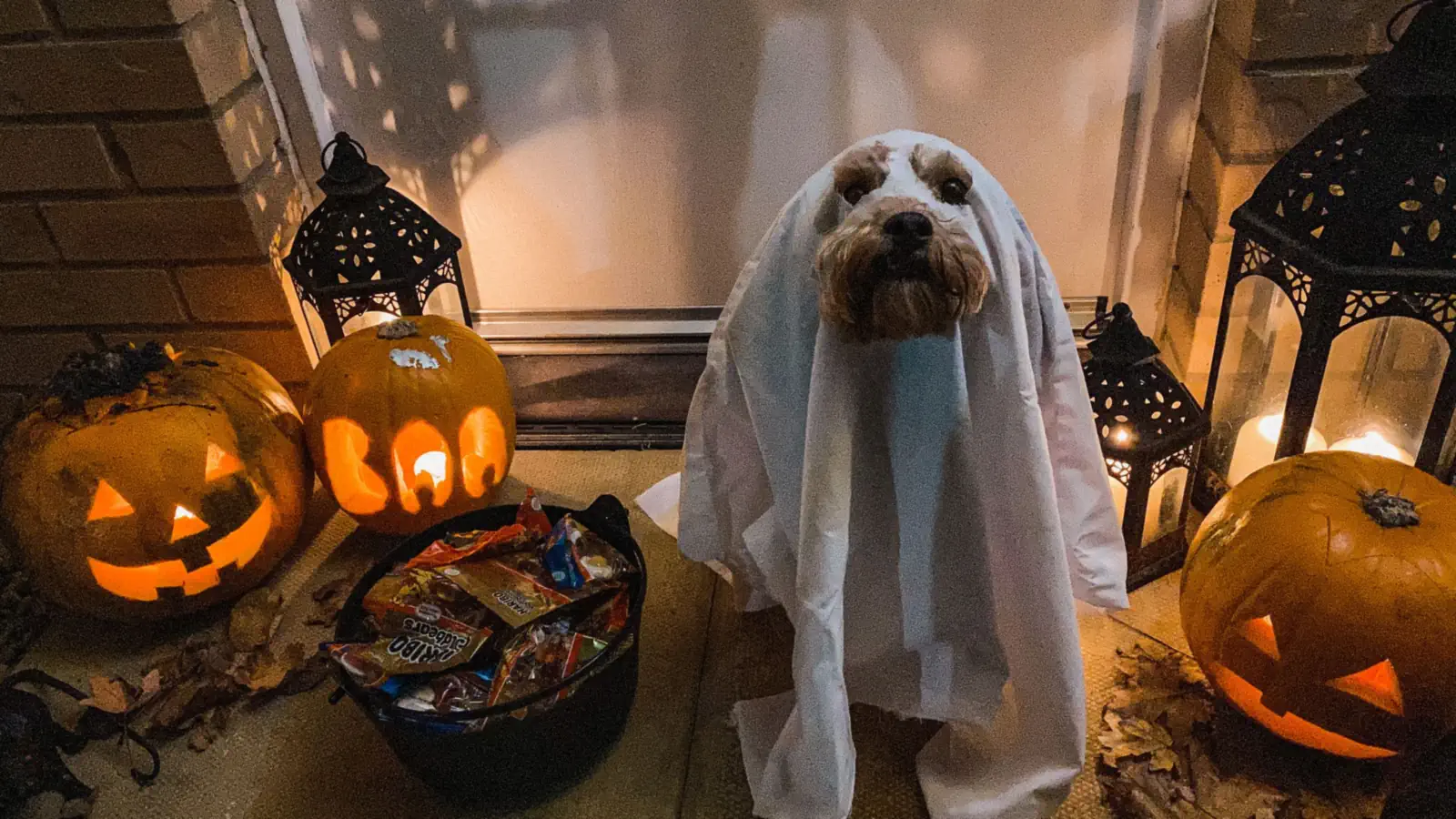
The Halloween hazards that actually hurt dogs and cats are chocolate, sugar-free candy sweetened with xylitol, raisins, swallowed wrappers, and a front door that keeps opening all evening. Keep candy out of reach, keep pets in a quiet room away from the door, and if your pet eats something it shouldn't, call for advice before doing anything else. Don't make your pet vomit unless a veterinarian or poison control tells you to.
One St. Pete wrinkle this year: Halloween 2026 falls on a Saturday. Our regular Saturday hours end at noon and we're closed Sunday, so trick-or-treat night lands outside our hours. Save two numbers now: VEG St. Petersburg, (727) 342-4334, open 24/7, and the ASPCA Animal Poison Control Center, (888) 426-4435, also 24/7 (a consultation fee may apply).
Which Halloween Candy Is Dangerous for Dogs and Cats?
Chocolate, xylitol and raisins are the three to take seriously, and wrappers cause a problem of their own.
Chocolate. Its stimulants, theobromine and caffeine, affect the heart and nervous system, and darker chocolate carries more of them. Cocoa powder and baking chocolate are the most concentrated, then dark chocolate, then milk chocolate; white chocolate has almost none. The combination that worries us most is dark or baking chocolate and a small dog, where even a small amount can be dangerous. Signs usually start 6 to 12 hours later: vomiting, diarrhea, thirst and restlessness, sometimes progressing to tremors, a racing heart or seizures. Cats rarely eat chocolate, but it's toxic to them too.
Xylitol. This sweetener shows up in sugar-free gum, mints and candy, some sugar-free chocolate bars and some peanut butters, sometimes labeled as birch sugar. In dogs it triggers an insulin surge that can drop blood sugar within 10 to 60 minutes, and larger amounts can injure the liver. Watch for vomiting, weakness, staggering, collapse or seizures. A sugar-free chocolate bar can carry both hazards at once.
Raisins. Snack boxes of raisins, and chocolate-covered raisins, are a real concern for dogs because raisins can cause kidney injury. The effect varies from dog to dog and batch to batch, so there's no amount we'd call safe. Vomiting may appear within 6 to 12 hours; kidney damage develops over the next one to three days.
Wrappers and lollipop sticks. A dog who raids the bowl usually swallows the foil and cellophane too, and wrappers or sticks can cause a blockage. Repeated vomiting, refusing food, a painful belly or straining without passing stool over the next day or two all deserve a call.
What Should I Do If My Pet Ate Halloween Candy?
Call first, with the wrapper in your hand, and don't try to make your pet vomit on your own.
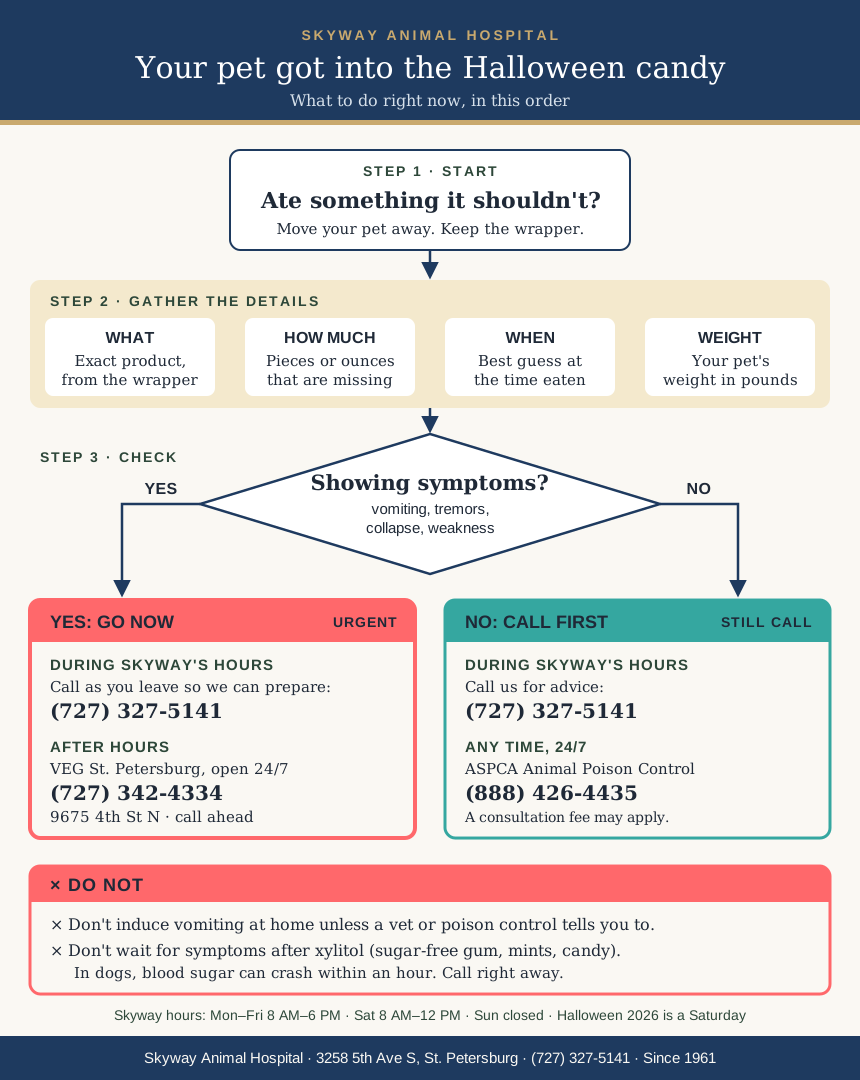
- Move your pet away and pick up what's left, wrappers included.
- Gather the details: the product (the wrapper tells us the chocolate type and whether there's xylitol), how much is missing, when it happened, and your pet's weight.
- If your pet is vomiting repeatedly, trembling, weak or collapsed, go now. During our hours, call us at (727) 327-5141 as you leave so we can prepare. After hours, go to VEG St. Petersburg at 9675 4th St N and call ahead.
- If your pet seems normal, still call. Call us during our hours, or ASPCA Animal Poison Control any time.
Don't induce vomiting at home unless a vet or poison control tells you to; some things cause more damage coming back up. And don't wait for symptoms after xylitol. Blood sugar can crash fast and liver injury may take a day or two to show, so a dog who seems fine still needs a call right away.
Glow Sticks, Candles and Costumes in October Heat
Glow sticks are usually more drama than danger, candles are a burn and fire risk, and costumes in St. Pete should be judged against the weather, not the calendar.
Glow sticks. Cats especially love to bite them. The ASPCA's poison control team reports most are labeled non-toxic but taste extremely bitter, so a pet who punctures one may drool and race around the house. A small treat usually clears the taste. Call anyway to confirm what your pet bit into.
Candles and jack-o'-lanterns. A wagging tail or a curious kitten can knock over a lit pumpkin. A battery-powered light removes the risk.
Costumes. St. Petersburg's normal October average temperature is 77.8°F by National Weather Service records, and that includes cooler nights, so afternoons run warmer and often humid. Dogs have sweat glands only on their paws and shed heat mainly by panting, so anything over the face or wrapped around the chest works against them. Flat-faced breeds, overweight dogs and seniors overheat most easily.
If your pet wears a costume:
- It shouldn't limit movement, sight, hearing, or the ability to breathe, bark or meow.
- Skip dangling pieces, buttons or elastic that can be chewed off and swallowed.
- Do a short trial run beforehand, and drop it if your pet freezes, hides or paws at it.
- Never leave a costumed pet alone, and take it off at the first sign of heavy panting, drooling or weakness.
Door-Dashers: Your Halloween Night Checklist
The safest plan for most pets on Halloween night is a closed room away from the front door, plus current ID in case they slip out anyway.
The door opens again and again, there are strangers in masks, and even calm pets can bolt. ID only works if it's current: in an Ohio State study of more than 7,700 microchipped strays in U.S. shelters, the most common reason an owner couldn't be reached was an incorrect or disconnected phone number.
- Set up a quiet room with water, a bed, a litter box for cats, and a fan or TV for background noise. Close it before the first knock.
- Check that the ID tag shows a number you'll answer that night.
- Update your microchip registration with the registry. If your pet isn't chipped, we offer microchipping; it's quick and needs no anesthesia.
- Put the candy bowl up high, and keep the kids' trick-or-treat bags off the bedroom floor.
- Walk your dog before dark, or use a leash, reflective collar and ID after sunset.
- Save both after-hours numbers in your phone.
Frequently Asked Questions
How much chocolate is toxic to a dog?
It depends on the type of chocolate and your dog's size, so there's no single safe amount. Baking chocolate and cocoa powder are far more concentrated than milk chocolate, and even small amounts can be dangerous for small dogs. Skip the math at home and call with the wrapper, how much is gone and your dog's weight.
Should I make my dog throw up after eating candy?
No, not unless a veterinarian or poison control tells you to. Whether vomiting helps depends on what was eaten, how long ago, and how your dog is doing right now, and a dog that's already weak or trembling shouldn't be made to vomit at all. Call first; if it's the right move, you'll be told how.
Where do I take my pet on Halloween night in St. Pete?
Go to VEG St. Petersburg at 9675 4th St N, open 24/7, and call ahead at (727) 342-4334. Halloween 2026 is a Saturday, and our regular hours end at noon that day. For advice on something your pet ate, ASPCA Animal Poison Control answers around the clock at (888) 426-4435 (a consultation fee may apply). We can coordinate follow-up care once we reopen Monday.
Questions before the 31st, or want help checking your pet's microchip? Call us at (727) 327-5141. Two more worth reading: how to plan for after-hours emergencies in St. Pete and emergency signs that need immediate veterinary care.
Written by the Skyway Animal Hospital team. Skyway has served Pinellas County pet families since 1961.