Red Tide and Your Pet: What Tampa Bay Owners Need to Watch For
Skyway Animal Hospital
Veterinary Team
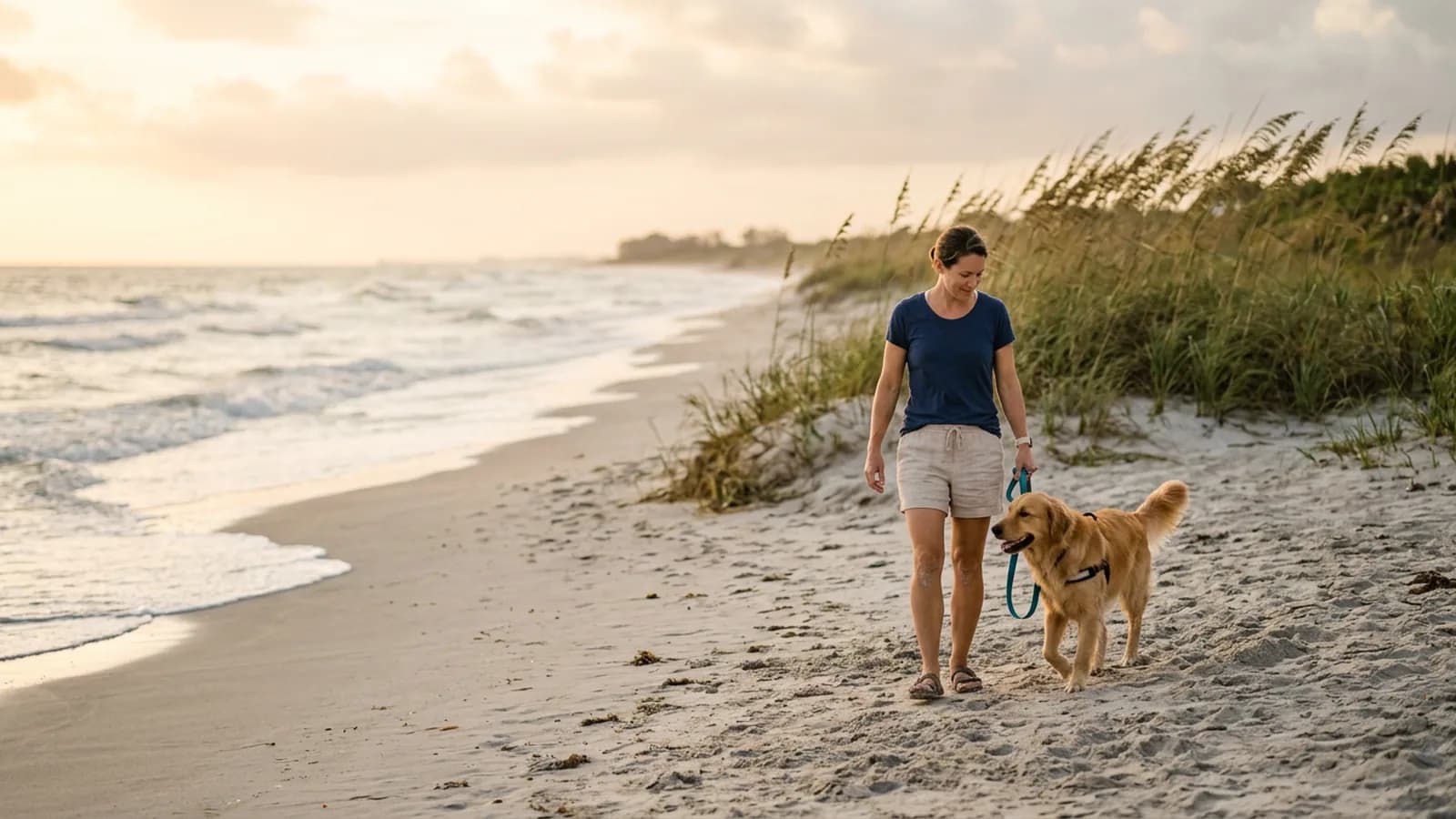
You know the feeling before you know the word for it. You get out of the car at Pass-a-Grille and within a minute your throat is scratchy and your eyes sting. Somebody nearby starts coughing. The wind is coming off the water, and there's a smell — sharp, briny, wrong. That's red tide. And if it's bothering you, it's bothering the dog in your back seat.
Red tide is the hazard that actually belongs to this coast. We've cared for pets in Pinellas County since 1961, and we've watched owners get very good at worrying about the wrong things. Blue-green algae gets the headlines, but that's a freshwater problem — it isn't what's rolling into Fort De Soto. Red tide is ours. Some years it's severe, some years it barely registers. Either way, the habit that prevents most of the trouble is simple: check before you go.
What Red Tide Actually Is — and Why It Isn't Blue-Green Algae
Red tide on Florida's Gulf coast is a bloom of a single-celled marine alga called Karenia brevis. It lives in salt water. When conditions line up it multiplies into a dense bloom that can tint the water rusty, kill fish in large numbers, and release toxins called brevetoxins.
Blue-green algae is a different thing entirely. Those are cyanobacteria, they bloom in fresh water — ponds, lakes, slow canals — and they produce different toxins. Both are worth avoiding, but they aren't interchangeable, and confusing them sends people to the wrong precautions in the wrong places. On the Gulf, you're thinking about red tide. At the neighborhood pond, blue-green algae.
The other thing that makes red tide unusual: you don't have to get in the water for it to reach you. Wave action breaks the cells apart and sends brevetoxins into the air as a fine aerosol. Onshore wind carries it up the beach and inland. That's the coughing you hear on the sand.
How Red Tide Affects Dogs and Cats
There are two exposure routes, and the one people worry about isn't the more dangerous one.
- Breathing it in. Aerosolized brevetoxin irritates the airway — the same scratchy throat and watery eyes you get. For most healthy dogs, a short walk during a mild bloom means some coughing that settles once they're away from the beach.
- Eating something. This is the real risk. Dead fish wash up by the hundreds during a significant bloom and the toxin concentrates in them. Contaminated seaweed and sea foam along the wrack line are just as bad. A dog that eats a dead fish takes in far more toxin than breathing ever delivers. A dog that swims and then grooms is eating it too, just slowly — which is why the rinse matters.
- Cats, too. Most cats aren't beach cats, but that aerosol travels inland on an onshore breeze. A cat in a beachside home with the windows open can get the same airway irritation, especially an older cat or one with asthma.
The Signs We Tell Owners to Watch For
Most of what we see is respiratory and shows up during or shortly after the trip:
- Coughing, sneezing, reverse sneezing
- Watery, red eyes and nasal discharge
- Throat clearing, gagging, a hoarse or honking sound
- Vomiting or diarrhea after a beach trip — that points toward ingestion rather than just breathing, and it's the one that gets our attention
- Lethargy or reluctance to move
- In more serious cases: wobbliness, tremors, weakness, drooling, difficulty breathing, seizures
Mild irritation that clears within an hour or two of leaving the beach usually just means your dog got a lungful of what you got. Vomiting, neurological signs, or real trouble breathing is a different category, and it means a vet needs to see them.
Which Pets Are Most at Risk
Some pets have far less margin than others:
- Flat-faced breeds. Bulldogs, French Bulldogs, Pugs, Boston Terriers, Persians. Their airways are compromised on a good day, and an irritant costs them room they don't have. In our practice these are the ones who get into trouble fastest.
- Seniors, who have less reserve and are often quieter about discomfort.
- Pets with existing respiratory disease — chronic bronchitis, collapsing trachea, feline asthma, heart disease with a cough.
- The scavengers. Every owner knows if they have one. The dog who eats things off the ground is the dog who finds the dead fish.
If your pet is on that list, a bloom isn't the day to test it.
What to Do After Beach Exposure
Assume anything on the coat is going in their mouth eventually. So:
- Get away from the beach first. Fresh air away from the shoreline resolves most mild irritation on its own.
- Rinse thoroughly with fresh water — the whole coat, paws, and face, before they start grooming. Don't let them lick themselves dry in the car.
- Offer fresh, clean water. Bring it, so they're never tempted to drink from the Gulf.
- Watch them the rest of the day. Signs from ingestion can lag.
- Call us during our hours at (727) 327-5141 if the coughing doesn't settle, if they vomit, or if anything looks neurological. We're open Monday through Friday 8 to 6 and Saturday 8 to noon. For an emergency outside those hours, VEG St. Petersburg is open around the clock at (727) 342-4334.
Before You Head to the Beach
The whole point is the two minutes on your phone before you drive out to Fort De Soto:
- Check FWC's red tide status map. The Florida Fish and Wildlife Conservation Commission publishes current Karenia brevis sample results by county — search "FWC red tide status."
- Check Mote Marine Laboratory's Beach Conditions Reporting System. Real people report from real beaches: respiratory irritation, dead fish, water color. It's the most useful single check, because it tells you about today rather than last week.
- Look at the beach flags and posted signage when you arrive.
- Trust your own throat. If you're coughing on the sand, turn around. Your dog can't tell you.
- Bring fresh water and a rinse plan regardless.
- Leash on, wrack line off-limits. Nothing dead gets eaten.
Frequently Asked Questions
Is red tide the same as the blue-green algae I keep reading about?
No, and this is the mix-up we correct most often. Red tide on our coast is Karenia brevis, a marine alga that blooms in salt water and releases brevetoxins that go airborne off the waves. Blue-green algae is cyanobacteria, blooms in fresh water like ponds and slow canals, and produces entirely different toxins. Both are worth keeping your pet away from, but they live in different places and call for different precautions.
Can my dog get sick from red tide without going in the water?
Yes. Brevetoxins become aerosolized when waves break the algae cells apart, and onshore wind carries that irritant well up the beach. A dog who never touches the water can still cough, sneeze, and get watery eyes simply from being there. That said, the more serious illness almost always comes from eating something — a dead fish, contaminated seaweed, or sea foam along the wrack line. Breathing it is usually irritating. Eating it is what makes pets truly sick.
How bad is red tide going to be this year?
Nobody can tell you that, including us. Severity varies enormously from year to year, and even week to week along the same stretch of coast. That's why the habit matters more than the forecast: check FWC and Mote's beach reports the morning you go, the same way you'd check the weather. If your pet is coughing after a beach trip and it isn't settling, call us during our hours at (727) 327-5141 and we'll take a look.
Red tide shouldn't keep your dog off the Gulf. It should just make you check first, because two minutes with a beach report is the difference between a good morning at Pass-a-Grille and a sick dog that night. See our guides to summer water dangers and flat-faced breeds and Florida heat. And if something doesn't look right after a beach day, give us a call while we're open. We'd rather hear from you early.
Written by the Skyway Animal Hospital team. Skyway has served Pinellas County pet families since 1961.