After the Storm: The Pet Hazards Nobody Warns You About
Skyway Animal Hospital
Veterinary Team
Every hurricane season, Pinellas County gets buried in pet preparedness checklists. Go-bags, carriers, copies of vaccine records, a week of food. All of it good advice, and we've written our own version — hurricane prep for Florida pets — because it matters.
Here's what almost nobody writes about: the injuries we actually see cluster in the week after the storm, not during it. The wind is the part everyone plans for. The aftermath is the part that hurts pets.
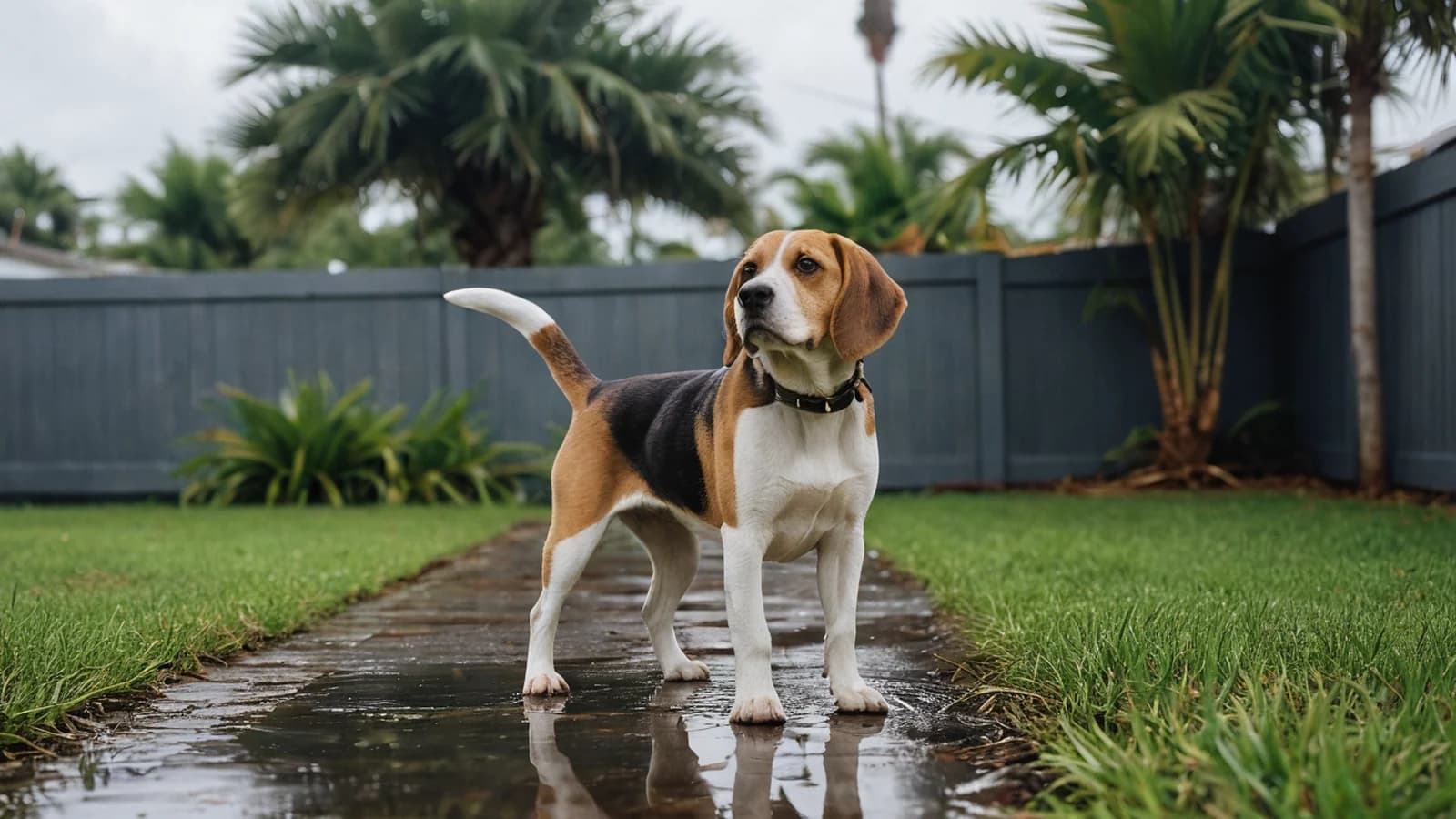
The pattern is consistent. The storm passes, the adrenaline drops, the door gets propped open while somebody drags a branch to the curb, and the dog who has been cooped up for thirty-six hours goes straight out into a yard that is no longer the yard he knows.
Standing Water Is the Biggest One
Floodwater in Pinellas is not rainwater. It's rainwater mixed with whatever the storm surge pushed inland and whatever came up out of the ground — sewage, fuel, fertilizer, lawn chemicals, and the contents of every garage on the block.
The specific concern is leptospirosis, a bacterial infection spread through the urine of infected animals, especially rats and raccoons, that survives well in warm standing water. Florida is a year-round lepto state and the risk climbs sharply after flooding. A dog doesn't need to swim in it — wading through and then licking their paws is enough. Untreated, lepto damages kidneys and liver, and it is transmissible to people.
There is a vaccine. If your dog has any yard access at all in Pinellas, it belongs in their protocol, and the time to ask about it is before the season, not during. We covered the broader picture in summer water dangers for Florida pets.
Beyond lepto, floodwater causes ordinary chemical irritation — inflamed paws, red bellies, and GI upset from drinking it. If your pet walks through standing water, rinse them with clean water when you get inside. Don't let it dry on the skin.
The Debris Field Your Pet Doesn't Recognize
A yard after a storm is a new environment. Downed fence panels open escape routes that didn't exist yesterday. Roofing nails, shattered screen framing, broken glass, and torn metal flashing end up in grass where they're invisible from human eye level and directly underfoot for a dog.
Paw lacerations are the single most common post-storm injury we treat. They bleed dramatically, they're easy to miss until you see blood on the tile, and they get infected fast in Florida humidity.
The other one is downed power lines and, less obviously, generators. Portable generator exhaust is carbon monoxide, and pets — smaller, lower to the ground, often confined to one room — show symptoms before people do. A generator belongs outside, well away from windows and doors, never in a garage or a screened lanai.
Displaced Wildlife Ends Up in Your Yard
Storms move animals. Snakes get flushed out of flooded ground cover. Raccoons and opossums relocate. And in Pinellas specifically, heavy rain brings out cane toads, which are lethal to dogs that mouth them — we've written about cane toad poisoning in detail, and the post-storm days are exactly when the risk spikes.
Displaced wildlife is also disoriented and more likely to stand its ground than run. A curious dog investigating a cornered raccoon is a bite wound and a rabies conversation.
For the first several days after a storm, walk your yard yourself before your pet does, and keep dogs leashed even in a fenced yard until you've confirmed the fence is actually intact.
The Lost-Pet Window
More pets go missing in the seventy-two hours after a storm than during it. Fences fail, doors get left open, and — the part people underestimate — the scent map a pet navigates by is gone. Water and debris erase the trail they'd normally use to get home. A dog that has never left the yard can genuinely become lost four blocks away.
This is what microchips are for, and a microchip only works if the registration is current. If you've moved or changed phone numbers since the chip was implanted — and in a county with as much turnover as Pinellas, many people have — the chip points to a dead end. Updating it takes five minutes online and it is free.
Your After-the-Storm Checklist
- Walk the yard before your pet does. Look for nails, glass, metal, downed fence sections, and standing water.
- Keep dogs leashed for the first few days, even in a fenced yard.
- Rinse paws and belly with clean water after any contact with floodwater. Don't let it dry.
- Check paw pads and between the toes daily for cuts. Bleeding that doesn't stop within a few minutes needs to be seen.
- Put the generator outside, away from windows, doors, and the lanai.
- Don't let pets drink standing water. Bring your own if you're walking.
- Confirm your microchip registration is current — today, not after they're missing.
- Ask about the lepto vaccine if your dog has yard access.
- Photograph your pet now, clearly, from the side. It's what a lost-pet flyer needs and nobody has one when it matters.
Frequently Asked Questions
My dog walked through floodwater and seems fine. Do I need to worry?
Rinse them well and watch for a week or two. Leptospirosis symptoms — lethargy, appetite loss, vomiting, increased drinking and urinating, sometimes yellowing of the gums or eyes — typically appear four to twelve days after exposure. Most dogs who wade through floodwater are fine. The ones who aren't do much better when caught early, so a call is worth it if anything seems off.
What if my pet is injured and you're closed?
We're a day practice — Monday through Friday 8:00 to 6:00, Saturday 8:00 to noon. For anything after hours, VEG St. Petersburg is open 24/7 at (727) 456-8323. For suspected poisoning, ASPCA Animal Poison Control is (888) 426-4435. Call us the next business day and we'll pick up the follow-up.
Should I board my pet before a storm instead?
If you're evacuating and can't take them, yes — but arrange it well before a named storm, not during. Boarding facilities fill fast and most require current vaccines, which is another reason to keep those from lapsing.
The storm gets all the attention because it's dramatic. The week afterward is quieter, everyone's exhausted, and that's exactly when a dog steps on a roofing nail in his own back yard.
Ten minutes walking your property before you let them out is the highest-return thing you can do. And if something does happen, call us at (727) 327-5141 — a paw laceration seen the same day is a very different problem from one seen three days later in this humidity.
Written by the Skyway Animal Hospital team. Skyway has served Pinellas County pet families since 1961.